

Fact of the Day - November
All of November’s North Shields 800 Facts of the Day in one place.
November 1st, 1849
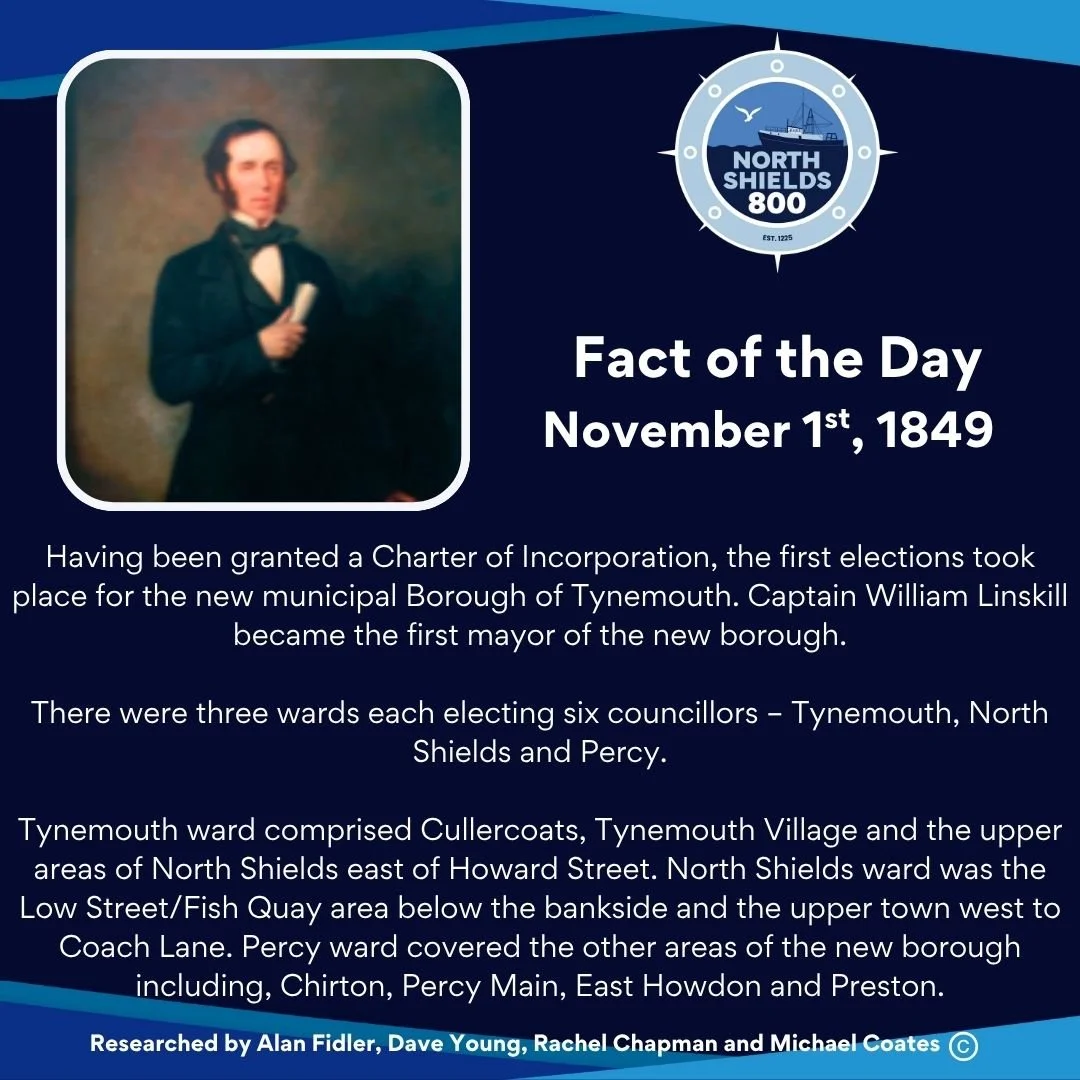
Having been granted a Charter of Incorporation, the first elections took place for the new municipal Borough of Tynemouth. Captain William Linskill became the first mayor of the new borough.
There were three wards each electing six councillors – Tynemouth, North Shields and Percy.
Tynemouth ward comprised Cullercoats, Tynemouth Village and the upper areas of North Shields east of Howard Street. North Shields ward was the Low Street/Fish Quay area below the bankside and the upper town west to Coach Lane. Percy ward covered the other areas of the new borough including, Chirton, Percy Main, East Howdon and Preston.
November 2nd, 1914
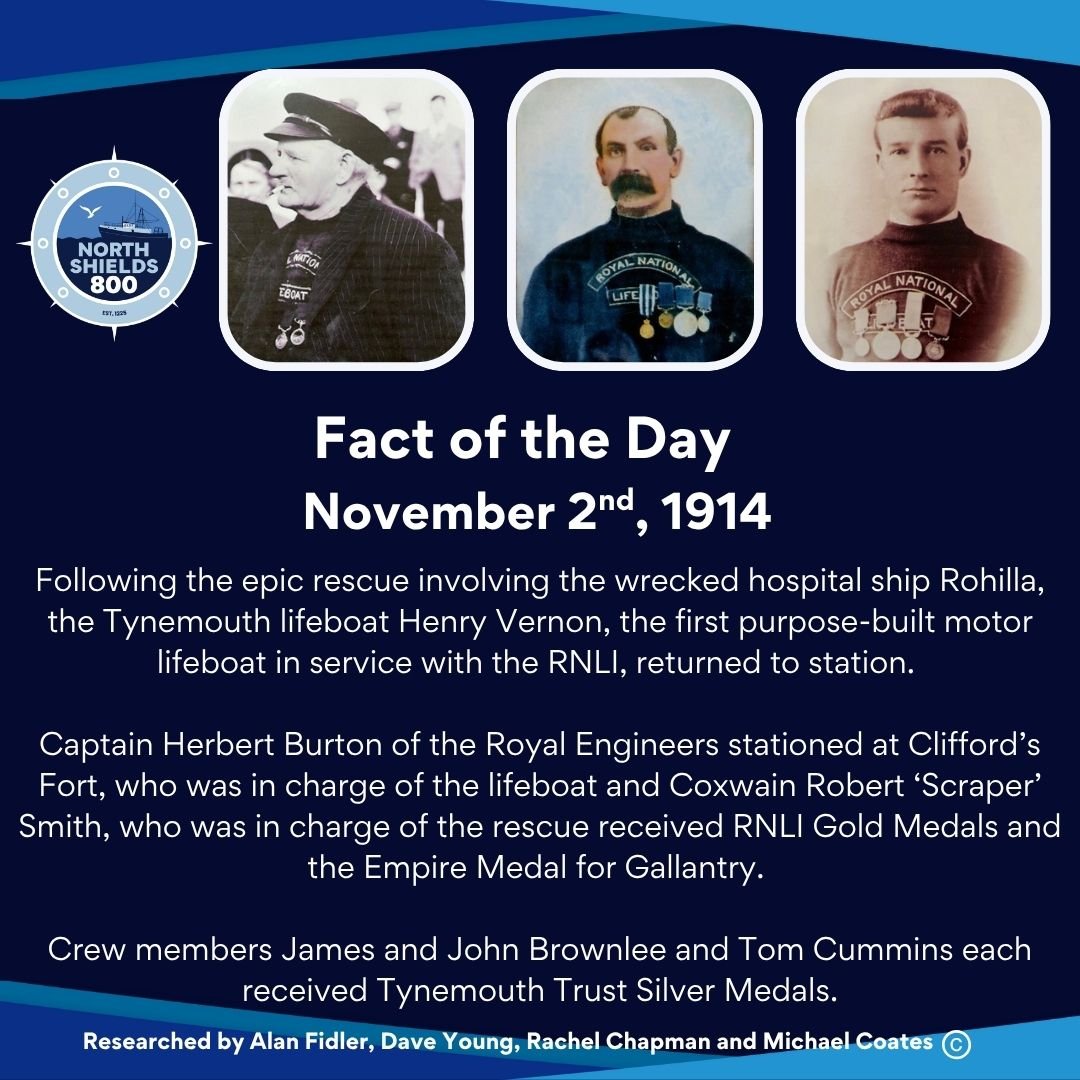
Following the epic rescue involving the wrecked hospital ship Rohilla, the Tynemouth lifeboat Henry Vernon, the first purpose-built motor lifeboat in service with the RNLI, returned to station.
Captain Herbert Burton of the Royal Engineers stationed at Clifford’s Fort, who was in charge of the lifeboat and Coxwain Robert ‘Scraper’ Smith, who was in charge of the rescue received RNLI Gold Medals and the Empire Medal for Gallantry.
Crew members James and John Brownlee and Tom Cummins each received Tynemouth Trust Silver Medals.
November 3rd, 1818
His imperial highness, the archduke Maximillian, cousin to the emperor of Russia, with his suite, on their tour to the North, honoured North Shields and Tynemouth with their presence.
Accompanied by Nicholas Fairless and others, he visited the ancient priory and fortifications of Tynemouth, the North Shields Subscription Library, and the various manufactories, and expressed himself highly gratified, particularly with Mr Flinn’s improved harpoon guns, whale lances, and other instruments used in the Greenland fishery.
November 4th, 1744
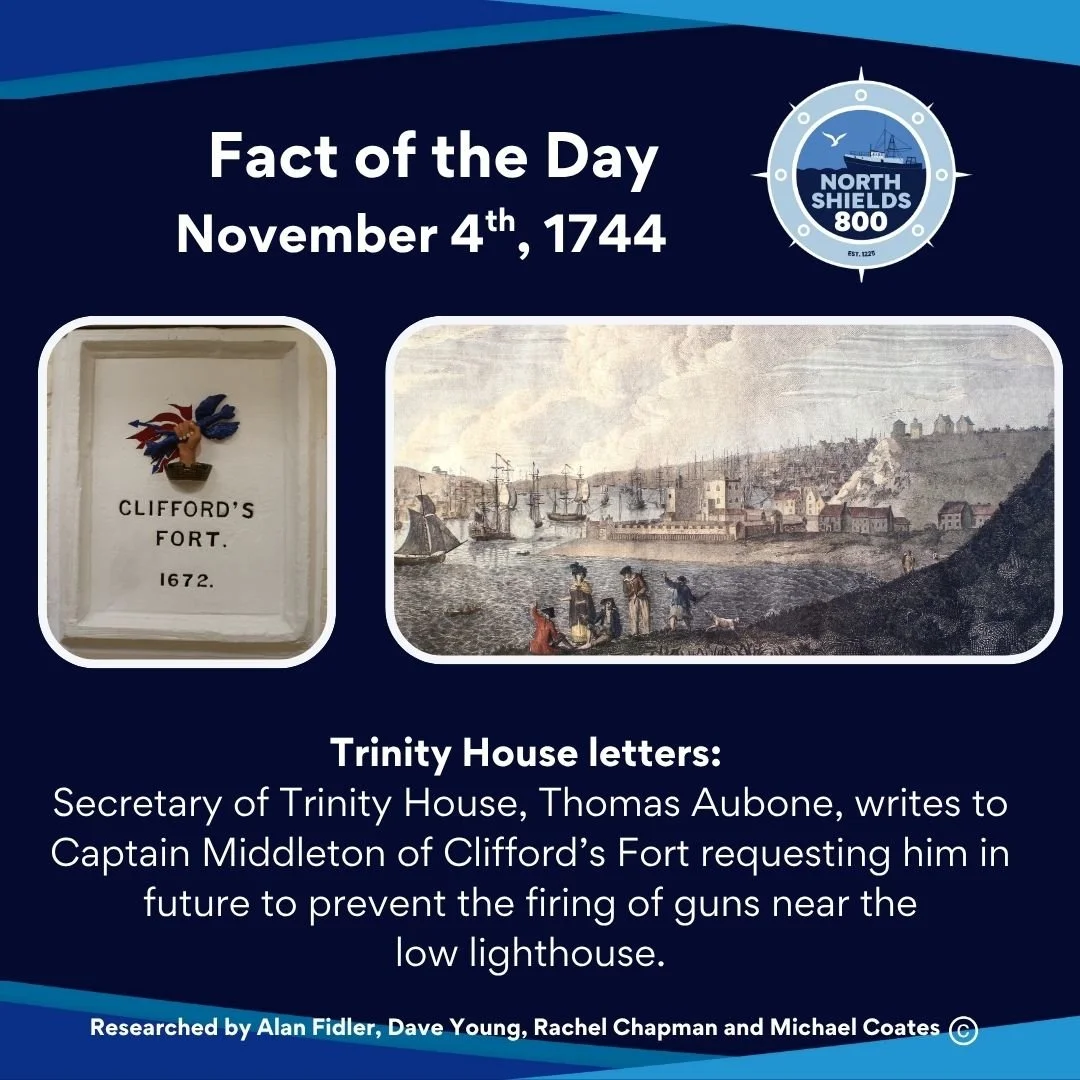
Trinity House letters: Secretary of Trinity House, Thomas Aubone, writes to Captain Middleton of Clifford’s Fort requesting him in future to prevent the firing of guns near the low lighthouse.
November 5th, 1807
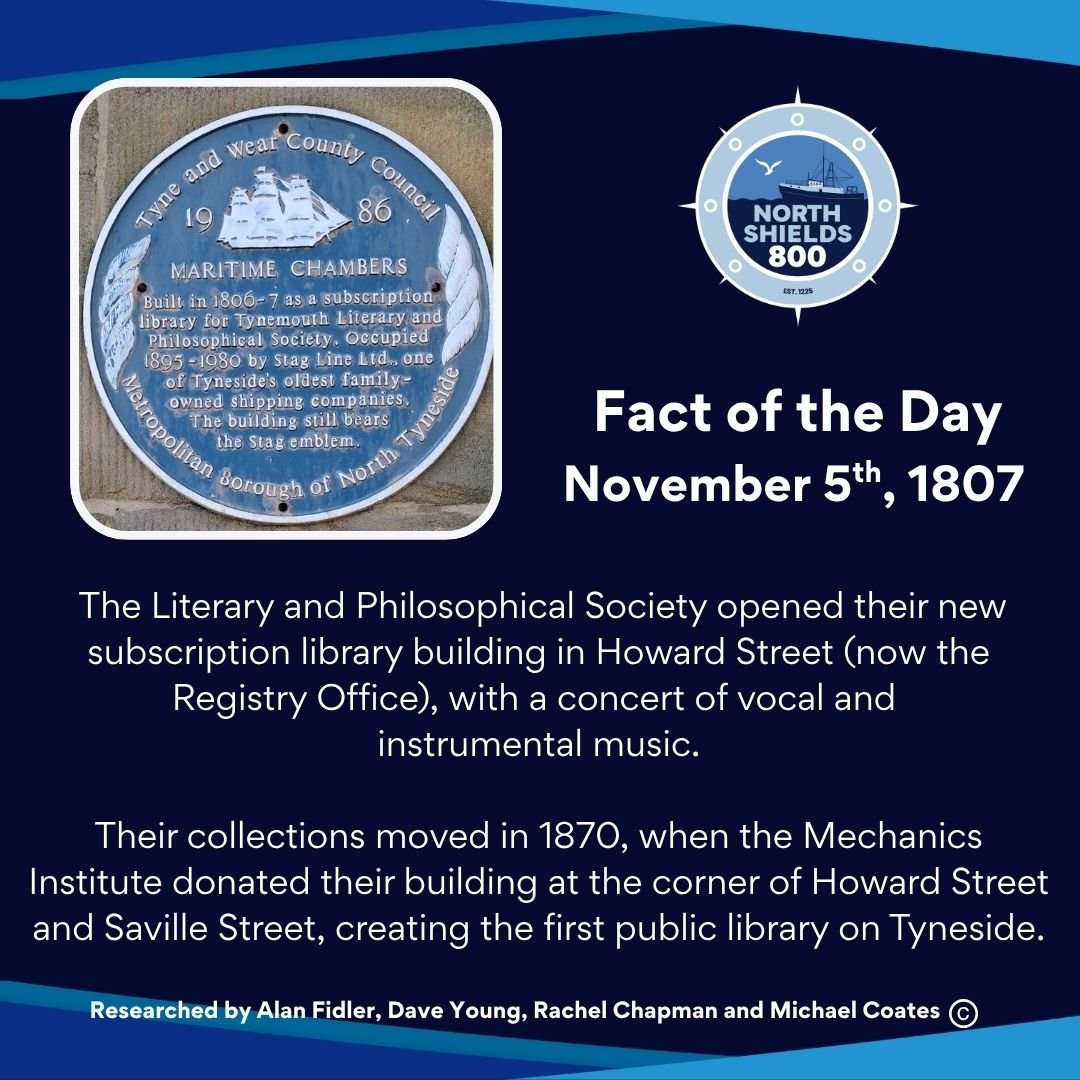
The Literary and Philosophical Society opened their new subscription library building in Howard Street (now the Registry Office), with a concert of vocal and instrumental music.
Their collections moved in 1870, when the Mechanics Institute donated their building at the corner of Howard Street and Saville Street, creating the first public library on Tyneside.
November 6th, 1907
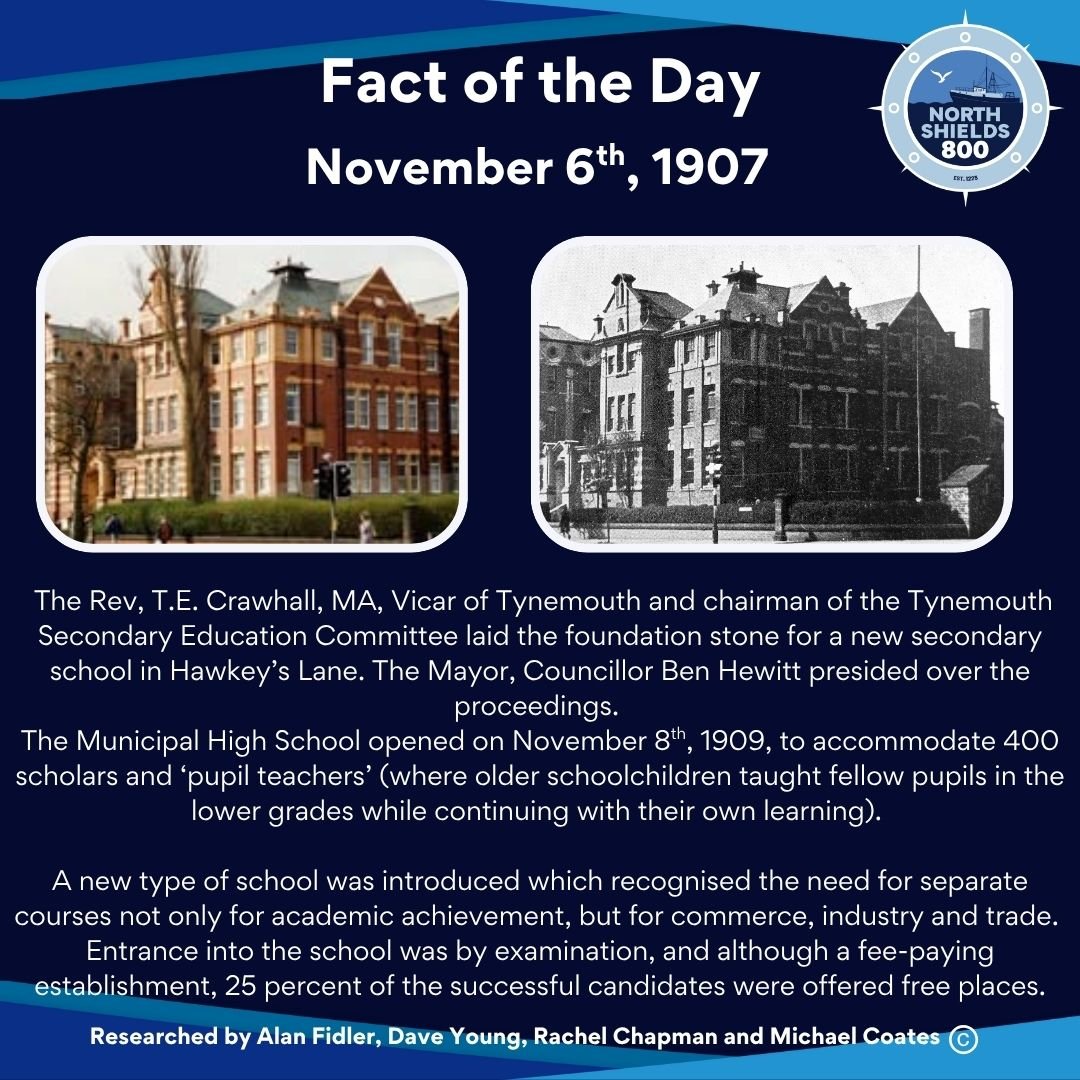
The Rev, T.E. Crawhall, MA, Vicar of Tynemouth and chairman of the Tynemouth Secondary Education Committee laid the foundation stone for a new secondary school in Hawkey’s Lane. The Mayor, Councillor Ben Hewitt presided over the proceedings.
The Municipal High School opened on November 8th, 1909, to accommodate 400 scholars and ‘pupil teachers’ (where older schoolchildren taught fellow pupils in the lower grades while continuing with their own learning). A new type of school was introduced which recognised the need for separate courses not only for academic achievement, but for commerce, industry and trade.
Entrance into the school was by examination, and although a fee-paying establishment, 25 percent of the successful candidates were offered free places.
November 7th, 1941
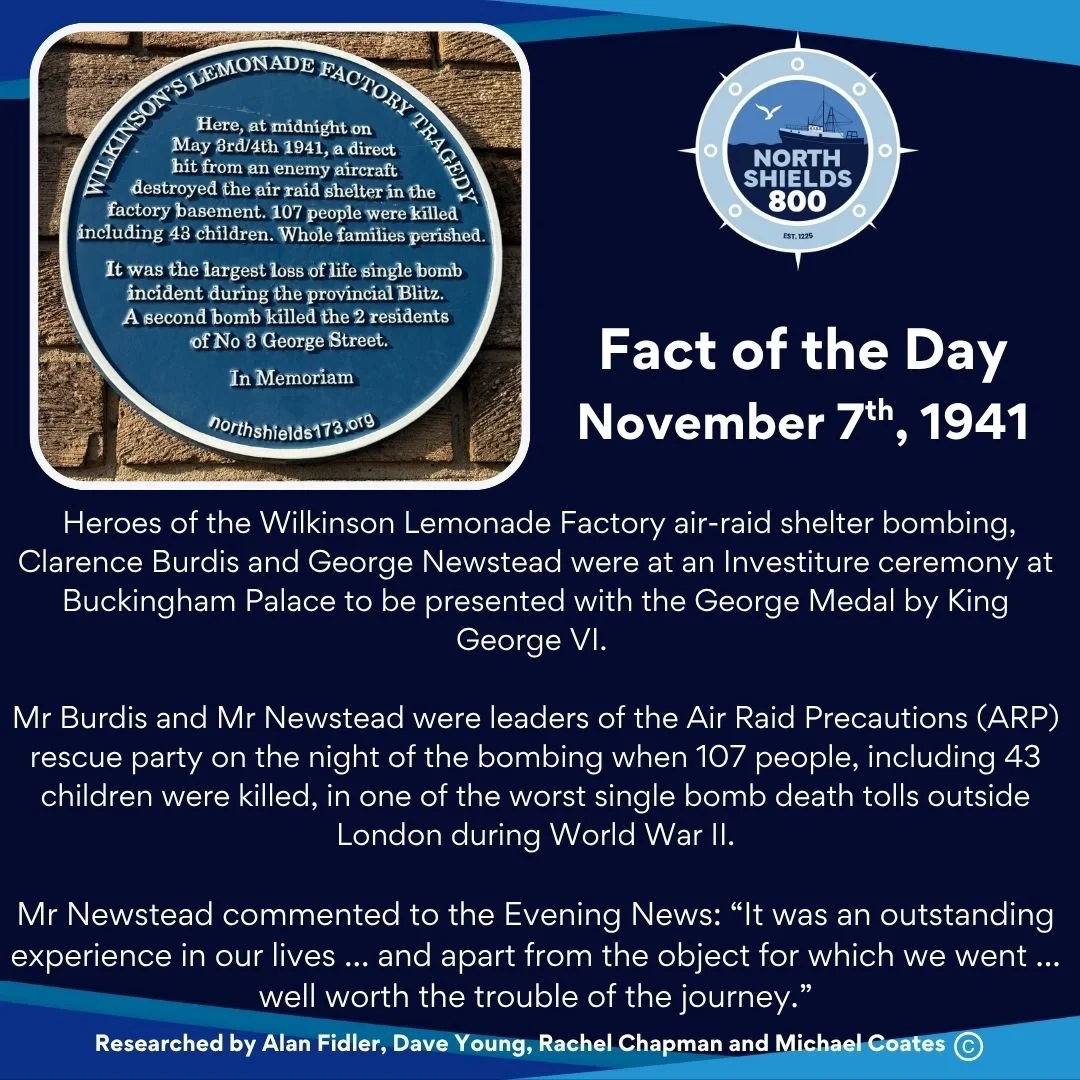
Heroes of the Wilkinson Lemonade Factory air-raid shelter bombing, Clarence Burdis and George Newstead were at an Investiture ceremony at Buckingham Palace to be presented with the George Medal by King George VI.
Mr Burdis and Mr Newstead were leaders of the Air Raid Precautions (ARP) rescue party on the night of the bombing when 107 people, including 43 children were killed, in one of the worst single bomb death tolls outside London during World War II.
Mr Newstead commented to the Evening News: “It was an outstanding experience in our lives … and apart from the object for which we went … well worth the trouble of the journey.”
November 8th, 1885
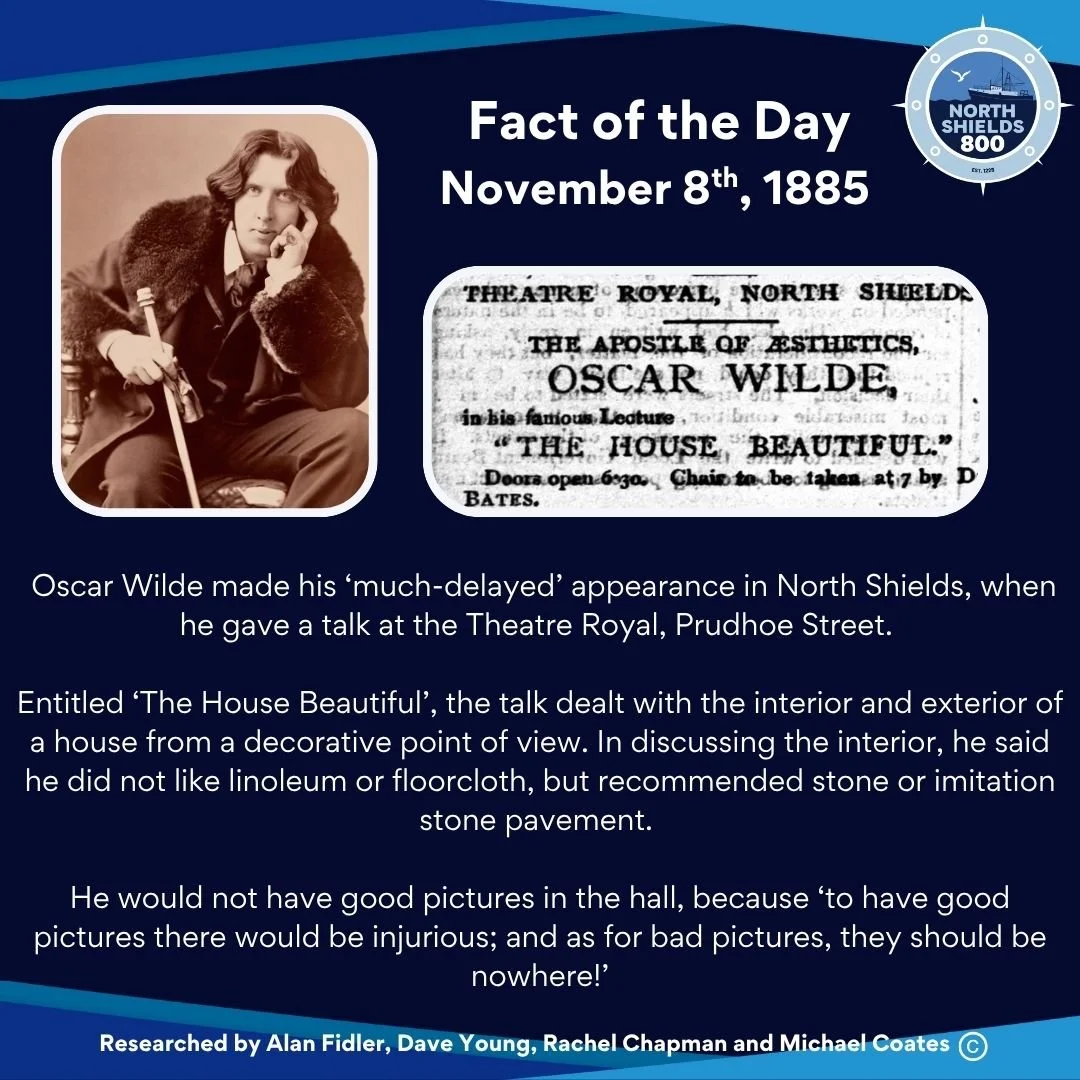
Oscar Wilde made his ‘much-delayed’ appearance in North Shields, when he gave a talk at the Theatre Royal, Prudhoe Street.
Entitled ‘The House Beautiful’, the talk dealt with the interior and exterior of a house from a decorative point of view. In discussing the interior, he said he did not like linoleum or floorcloth, but recommended stone or imitation stone pavement.
He would not have good pictures in the hall, because ‘to have good pictures there would be injurious; and as for bad pictures, they should be nowhere!’
November 9th, 1874
The Mayor of the Borough of Tynemouth R W Surtees was presented with a massive solid silver epergne (a decorative table centrepiece) and a large silver tray as a memento of the birth of his son Stanley.
‘The articles were of a very handsome description and contained 360 ounces of solid silver’.
November 10th, 1919
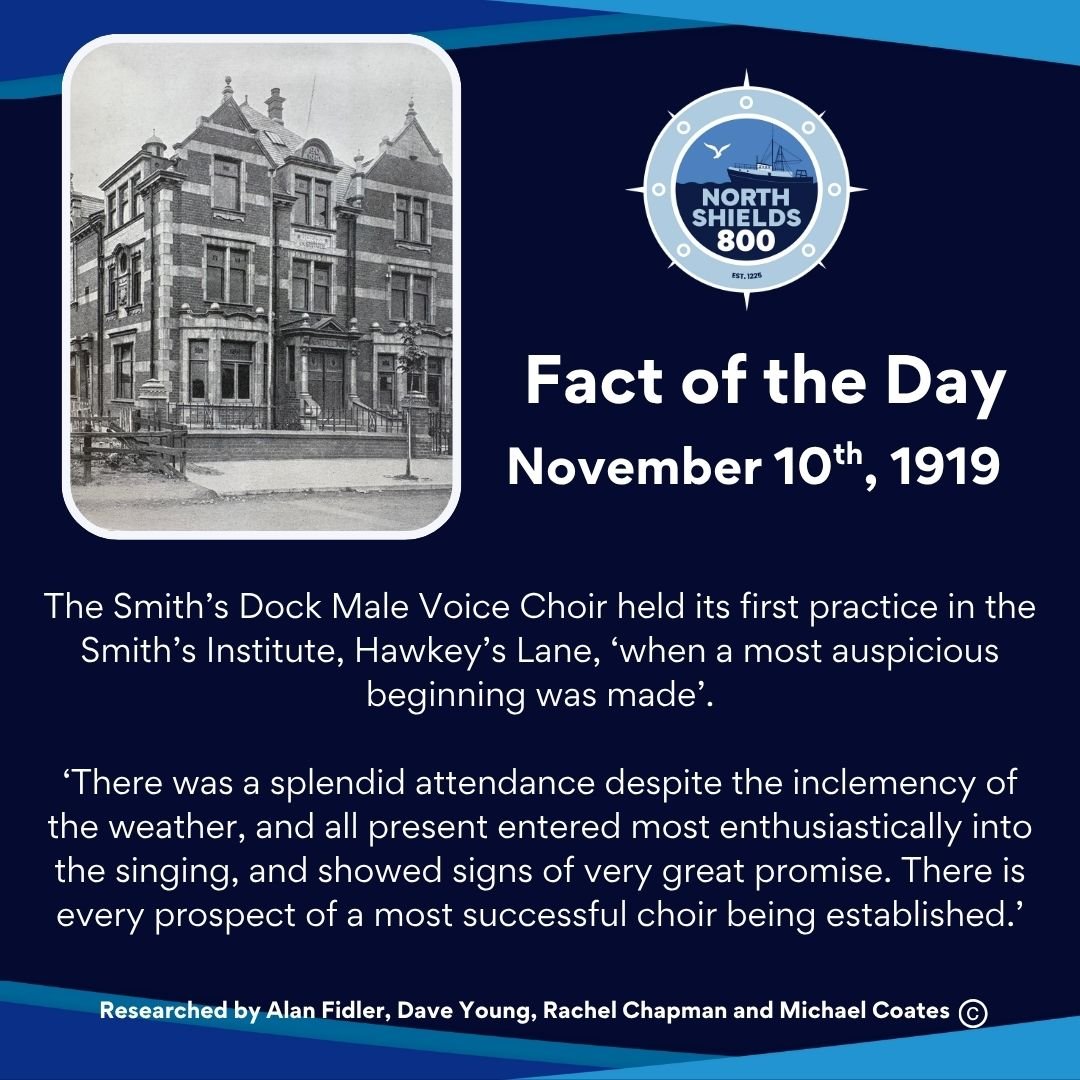
The Smith’s Dock Male Voice Choir held its first practice in the Smith’s Institute, Hawkey’s Lane, ‘when a most auspicious beginning was made’.
‘There was a splendid attendance despite the inclemency of the weather, and all present entered most enthusiastically into the singing, and showed signs of very great promise. There is every prospect of a most successful choir being established.’
November 11th, 2021
Adrian (John) Nichol, who was born and raised in Chirton, and John Peters published an updated paperback of ‘Tornado Down’.
Their book was first published in 1992, describing how as RAF flight lieutenants during the Gulf War in 1991 they were shot down. They were captured in the desert, half a mile from their blazing Tornado bomber.
This led to seven harrowing weeks of torture, confinement and interrogation, an ordeal that brought both men close to death.
The original book was a best seller, described by the Daily Mail as ‘the most compelling story of the Gulf War’.
November 12th, 1856
Local media reports of an explosion the previous day on the Blyth and Tyne Railway at Percy Main depot.
A ‘pilot’ engine was standing near to the railway workshops, ‘under steam, awaiting orders’ when it exploded with ‘fearful violence’.
Fireman Joseph Percy ‘suffered a terrible death’, with several others having a narrow escape. The engine was ‘shattered to pieces’.
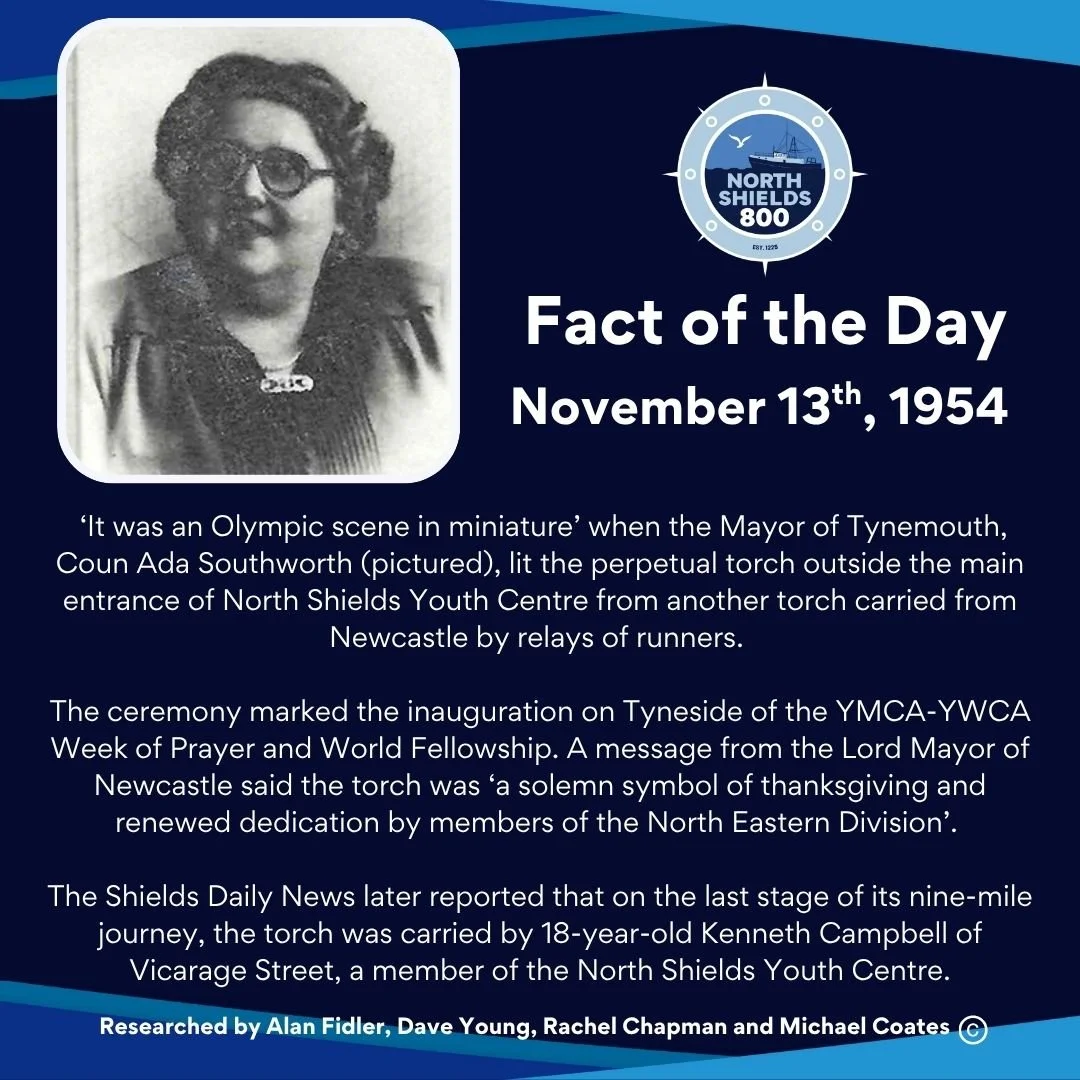
November 13th, 1954
‘It was an Olympic scene in miniature’ when the Mayor of Tynemouth, Councillor Ada Southworth, lit the perpetual torch outside the main entrance of North Shields Youth Centre from another torch carried from Newcastle by relays of runners.
The ceremony marked the inauguration on Tyneside of the YMCA-YWCA Week of Prayer and World Fellowship. A message from the Lord Mayor of Newcastle said the torch was ‘a solemn symbol of thanksgiving and renewed dedication by members of the North Eastern Division’.
The Shields Daily News later reported that on the last stage of its nine-mile journey, the torch was carried by 18-year-old Kenneth Campbell of Vicarage Street, a member of the North Shields Youth Centre.

November 14th, 1901
In ferocious weather, Tynemouth Volunteer Life Brigade and coastguards were returning from another local rescue, when a small ketch, the Journeeks of Riga, Russia was seen trying to make the Tyne entrance.
Unable to round the North Pier, two TVLB men used flags to guide her into King Edward’s Bay. Rescuers bravely entered the waves saving one man. Three bodies were later recovered.
Michael Lowes (TVLB) was awarded the Tynemouth Trust Silver Medal, and all rescuers were awarded the Diploma and Medal of the Imperial Russian Society for Saving Life on the Waters.
Thank you to Dave Bell, TVLB, for sharing this information
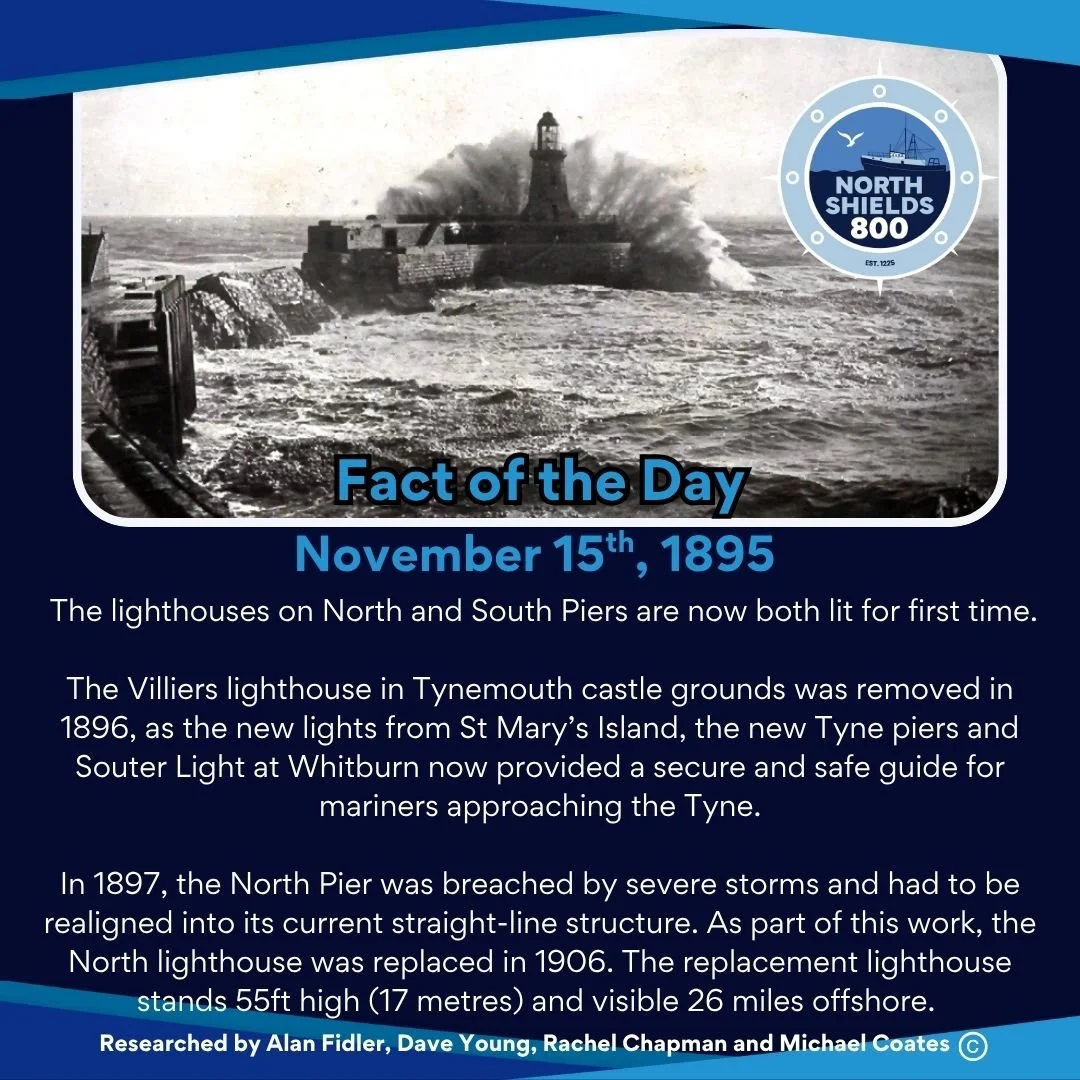
November 15th, 1895
The lighthouses on North and South Piers are now both lit for first time.
The Villiers lighthouse in Tynemouth castle grounds was removed in 1896, as the new lights from St Mary’s Island, the new Tyne piers and Souter Light at Whitburn now provided a secure and safe guide for mariners approaching the Tyne.
In 1897, the North Pier was breached by severe storms and had to be realigned into its current straight-line structure. As part of this work, the North lighthouse was replaced in 1906. The replacement lighthouse stands 55ft high (17 metres) and visible 26 miles offshore.
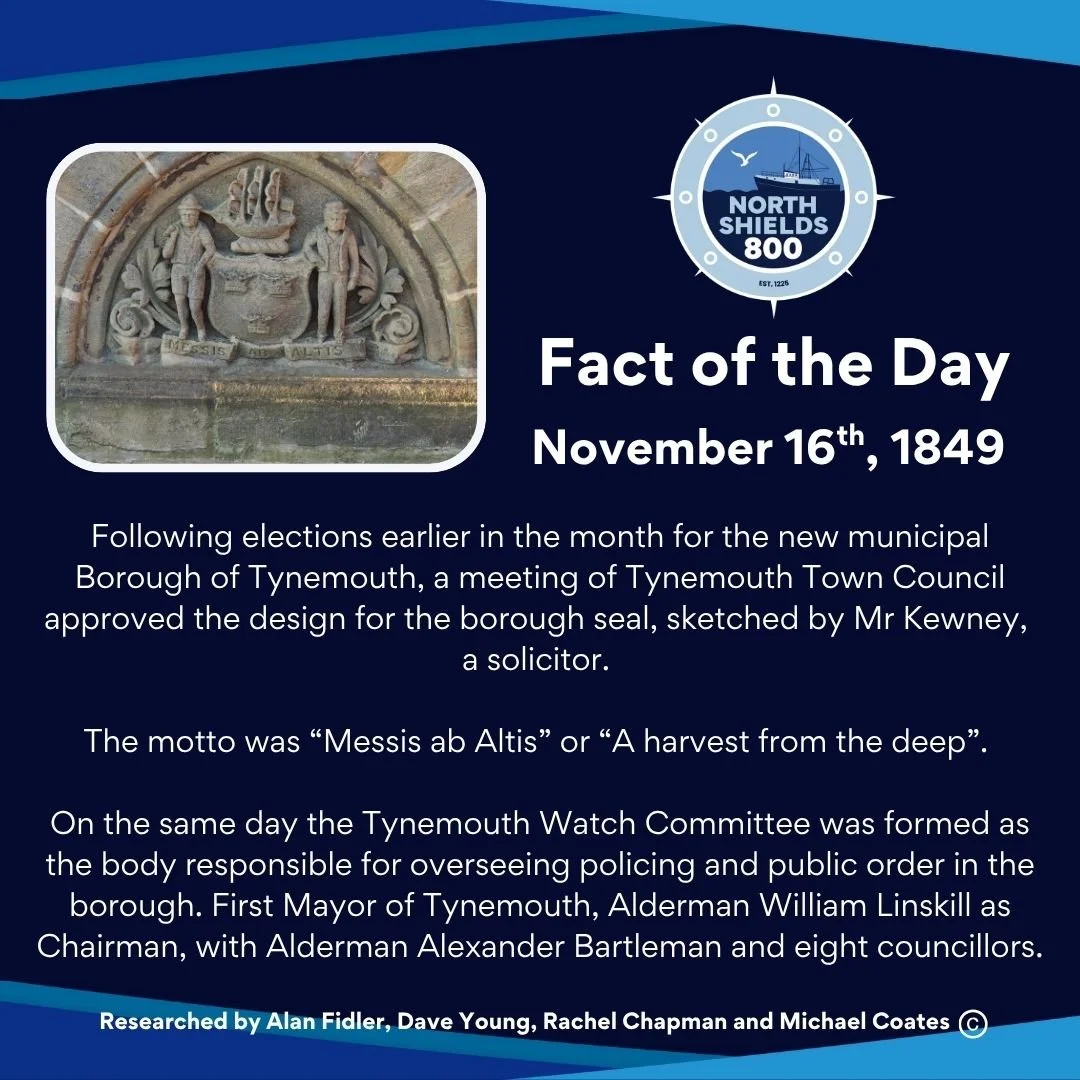
November 16th, 1849
Following elections earlier in the month for the new municipal Borough of Tynemouth, a meeting of Tynemouth Town Council approved the design for the borough seal, sketched by Mr Kewney, a solicitor.
The motto was “Messis ab Altis” or “A harvest from the deep”.
On the same day the Tynemouth Watch Committee was formed as the body responsible for overseeing policing and public order in the borough. First Mayor of Tynemouth, Alderman William Linskill as Chairman, with Alderman Alexander Bartleman and eight councillors.
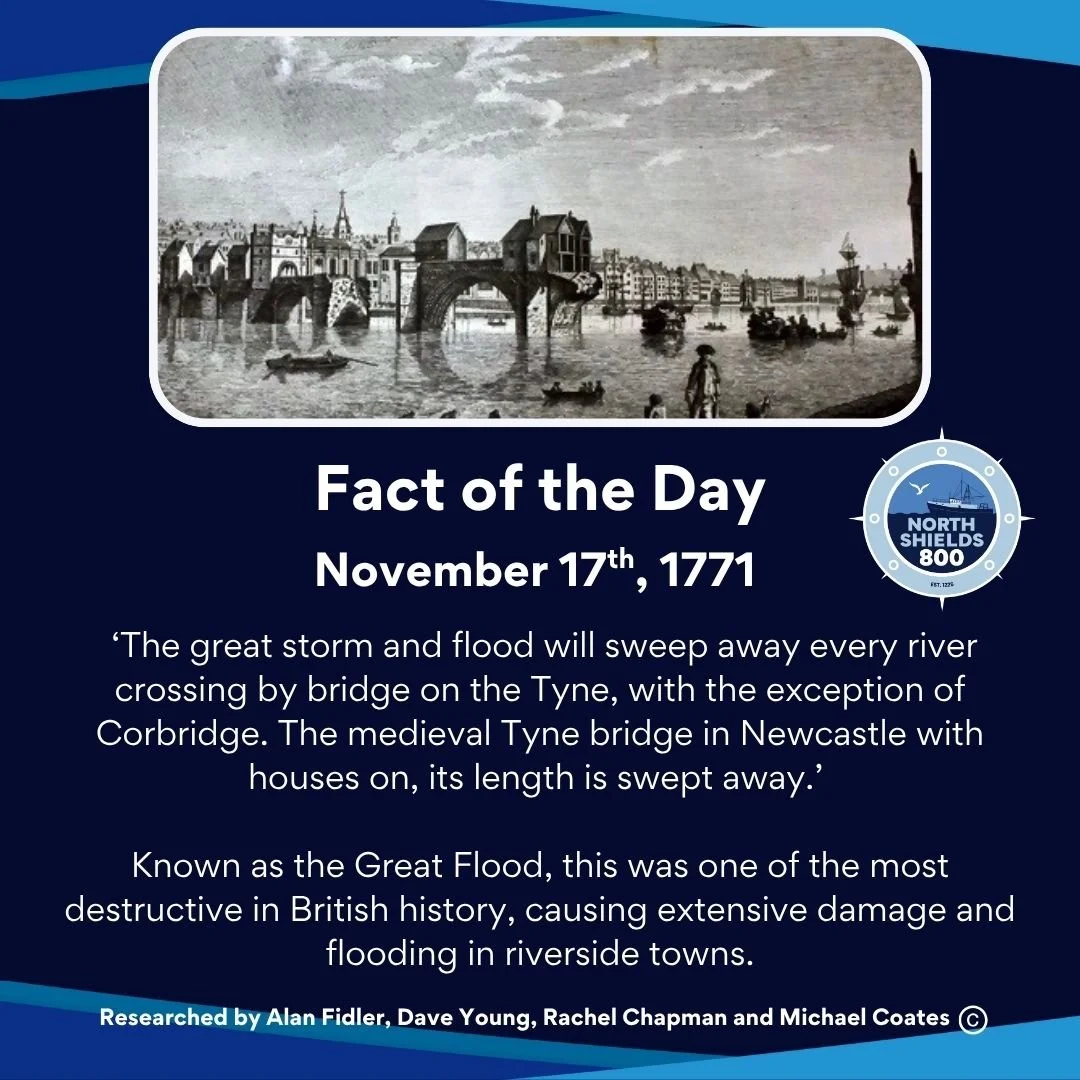
November 17th, 1771
‘The great storm and flood will sweep away every river crossing by bridge on the Tyne, with the exception of Corbridge. The medieval Tyne bridge in Newcastle with houses on, its length is swept away.’
Known as the Great Flood, this was one of the most destructive in British history, causing extensive damage and flooding in riverside towns.
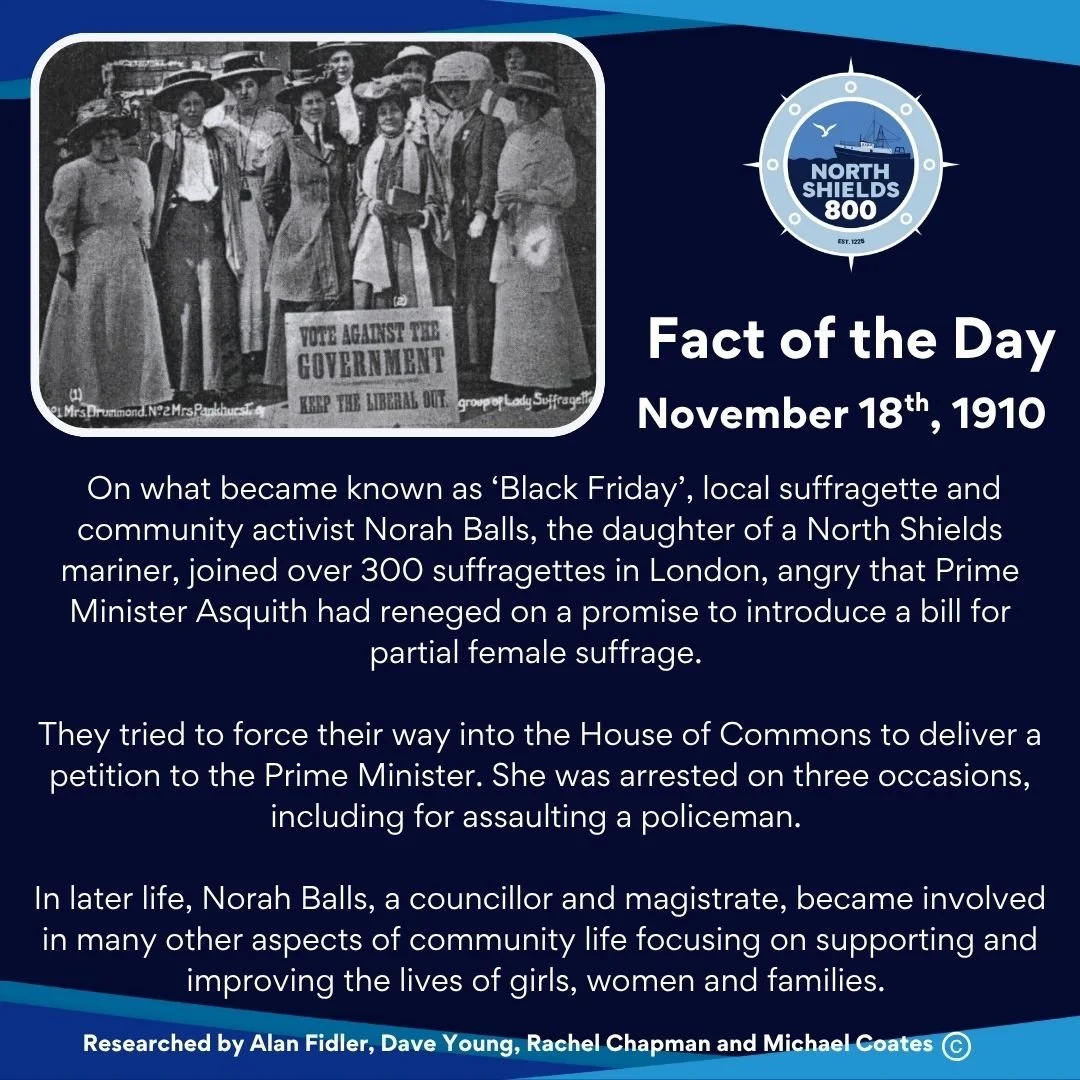
November 18th, 1910
On what became known as ‘Black Friday’, local suffragette and community activist Norah Balls, the daughter of a North Shields mariner, joined over 300 suffragettes in London, angry that Prime Minister Asquith had reneged on a promise to introduce a bill for partial female suffrage.
They tried to force their way into the House of Commons to deliver a petition to the Prime Minister. She was arrested on three occasions, including for assaulting a policeman.
In later life, Norah Balls, a councillor and magistrate, became involved in many other aspects of community life focusing on supporting and improving the lives of girls, women and families.
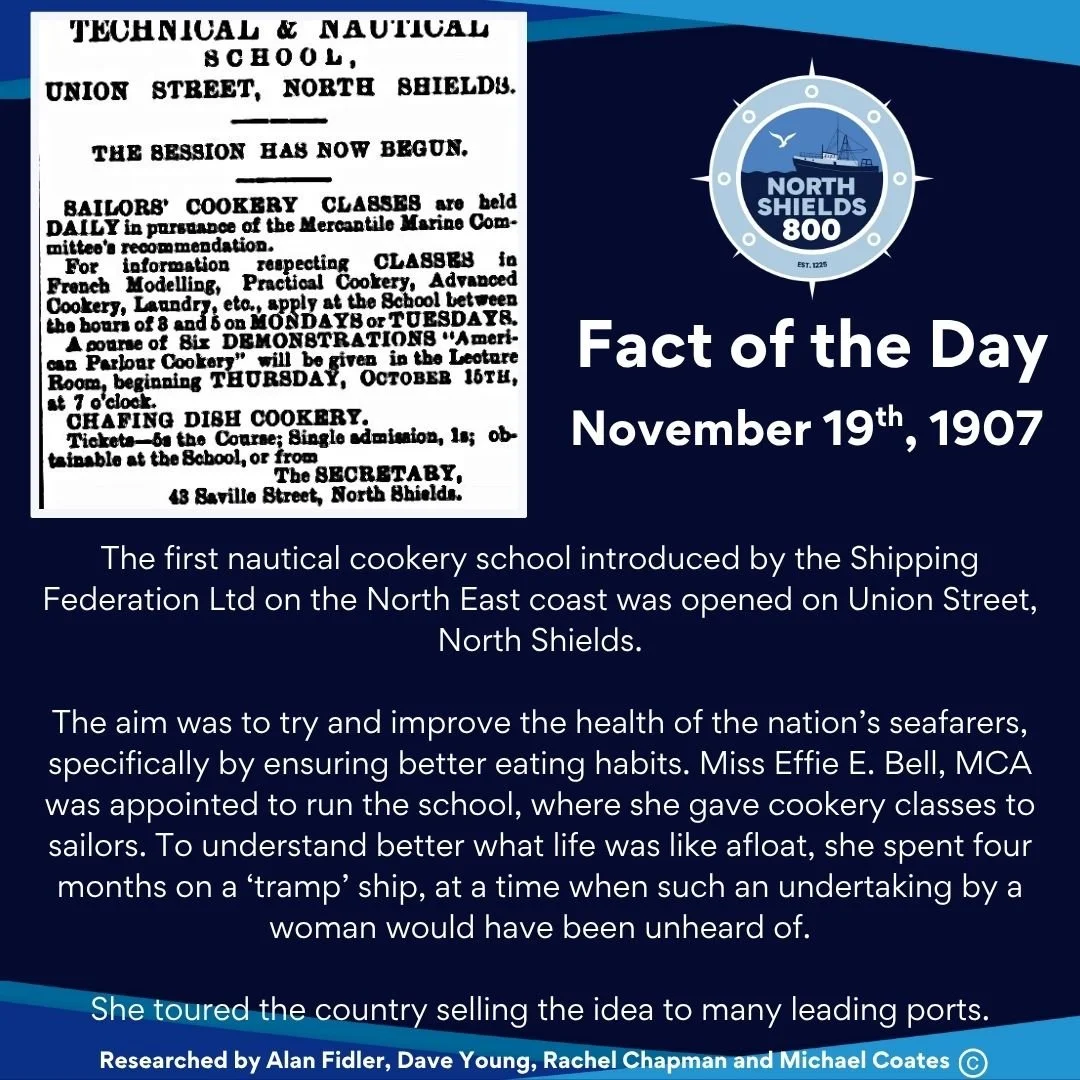
November 19th, 1907
The first nautical cookery school introduced by the Shipping Federation Ltd on the North East coast was opened on Union Street, North Shields.
The aim was to try and improve the health of the nation’s seafarers, specifically by ensuring better eating habits. Miss Effie E. Bell, MCA was appointed to run the school, where she gave cookery classes to sailors. To understand better what life was like afloat, she spent four months on a ‘tramp’ ship, at a time when such an undertaking by a woman would have been unheard of.
She toured the country selling the idea to many leading ports.
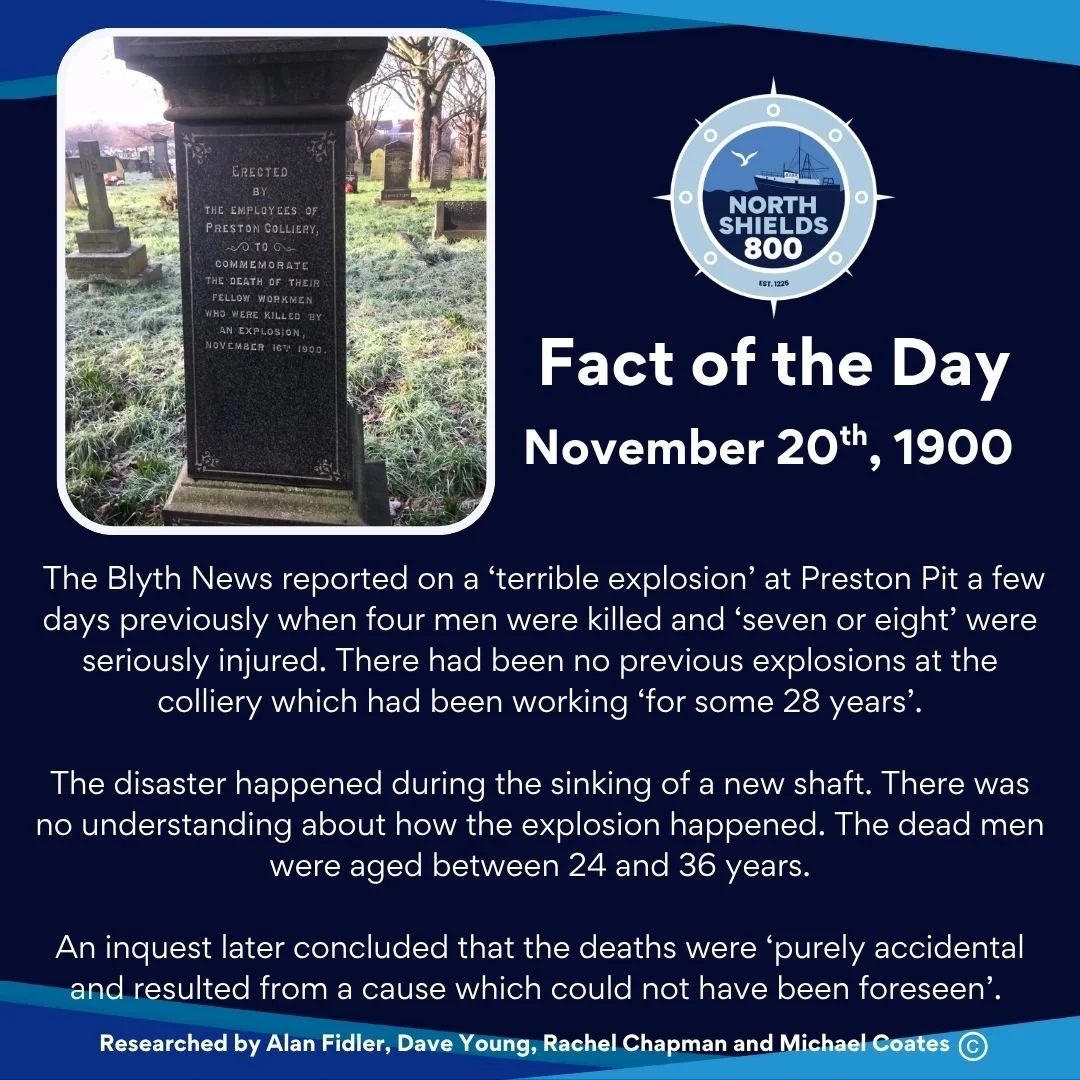
November 20th, 1900
The Blyth News reported on a ‘terrible explosion’ at Preston Pit a few days previously when four men were killed and ‘seven or eight’ were seriously injured. There had been no previous explosions at the colliery which had been working ‘for some 28 years’.
The disaster happened during the sinking of a new shaft. There was no understanding about how the explosion happened. The dead men were aged between 24 and 36 years.
An inquest later concluded that the deaths were ‘purely accidental and resulted from a cause which could not have been foreseen’.
November 21st, 1829
A meeting of the inhabitants of North and South Shields was held at the George Tavern, North Shields, with Robert Spence in the chair, when an association was formed to be called ‘The Shields East India Association’, for the purpose of opposing the renewal of the Honourable East India Company of London’s Charter (which was restricting trade into the sub-continent).
A similar meeting had been held at the Turk’s Head Inn, Newcastle. This later resulted in the formation of ‘The Newcastle East India Association’.
November 22nd, 1887
Shields Daily News reported the “Melancholy Death of a North Shields Official”.
The body of Mr H B Thompson, a 74-year-old staunch teetotaller, rate collector for Tynemouth Corporation, was discovered in his ground floor office at 55 Church Way after a fire was extinguished about 4am.
It was his custom to sit in the evening in his ground floor office in front of his small fire smoking his pipe and reading the paper and it was assumed he may have fallen asleep and his pipe set fire to his papers.
November 23rd, 1852
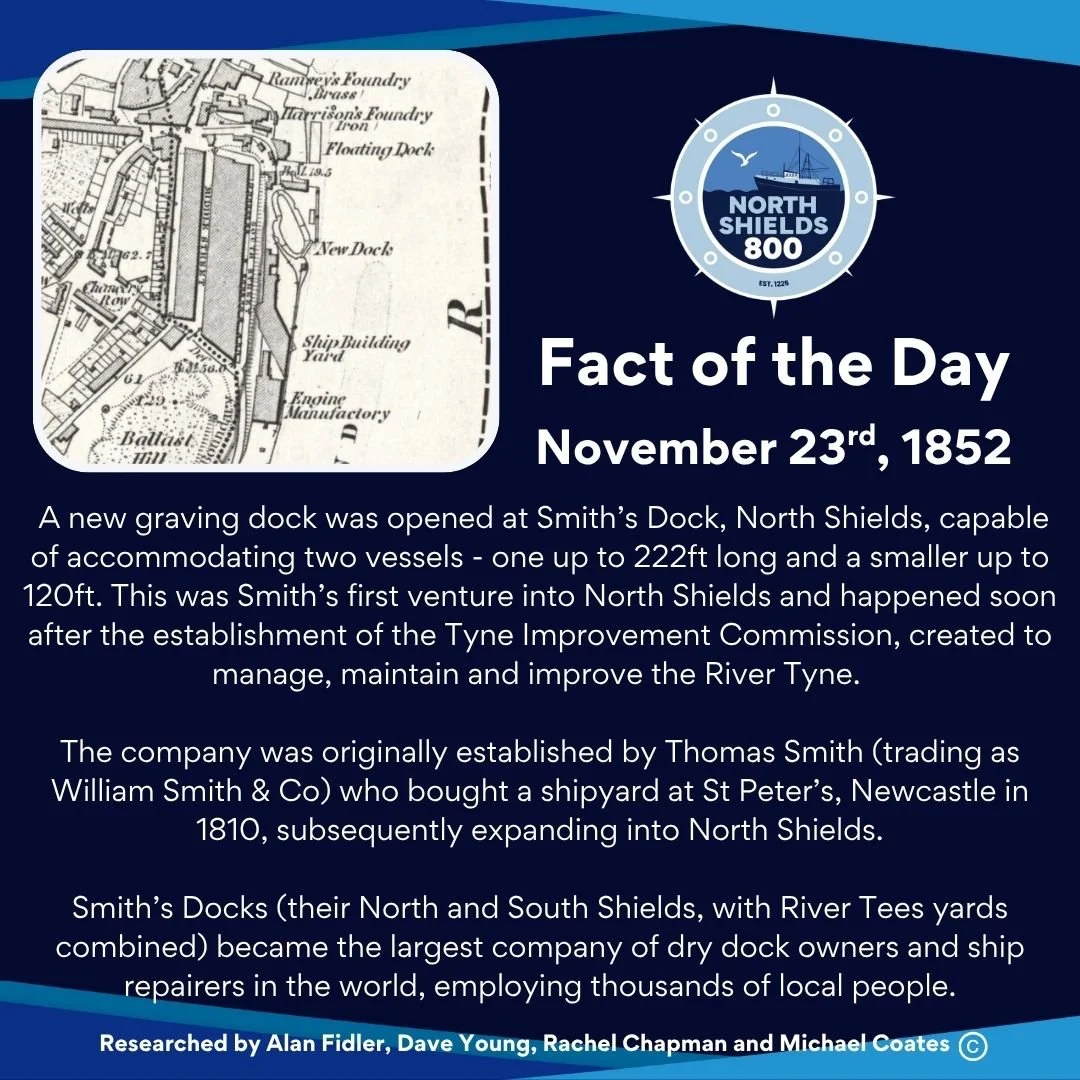
A new graving dock was opened at Smith’s Dock, North Shields, capable of accommodating two vessels - one up to 222ft long and a smaller up to 120ft. This was Smith’s first venture into North Shields and happened soon after the establishment of the Tyne Improvement Commission, created to manage, maintain and improve the River Tyne.
The company was originally established by Thomas Smith (trading as William Smith & Co) who bought a shipyard at St Peter’s, Newcastle in 1810, subsequently expanding into North Shields.
Smith’s Docks (their North and South Shields, with River Tees yards combined) became the largest company of dry dock owners and ship repairers in the world, employing thousands of local people.
November 24th, 1902
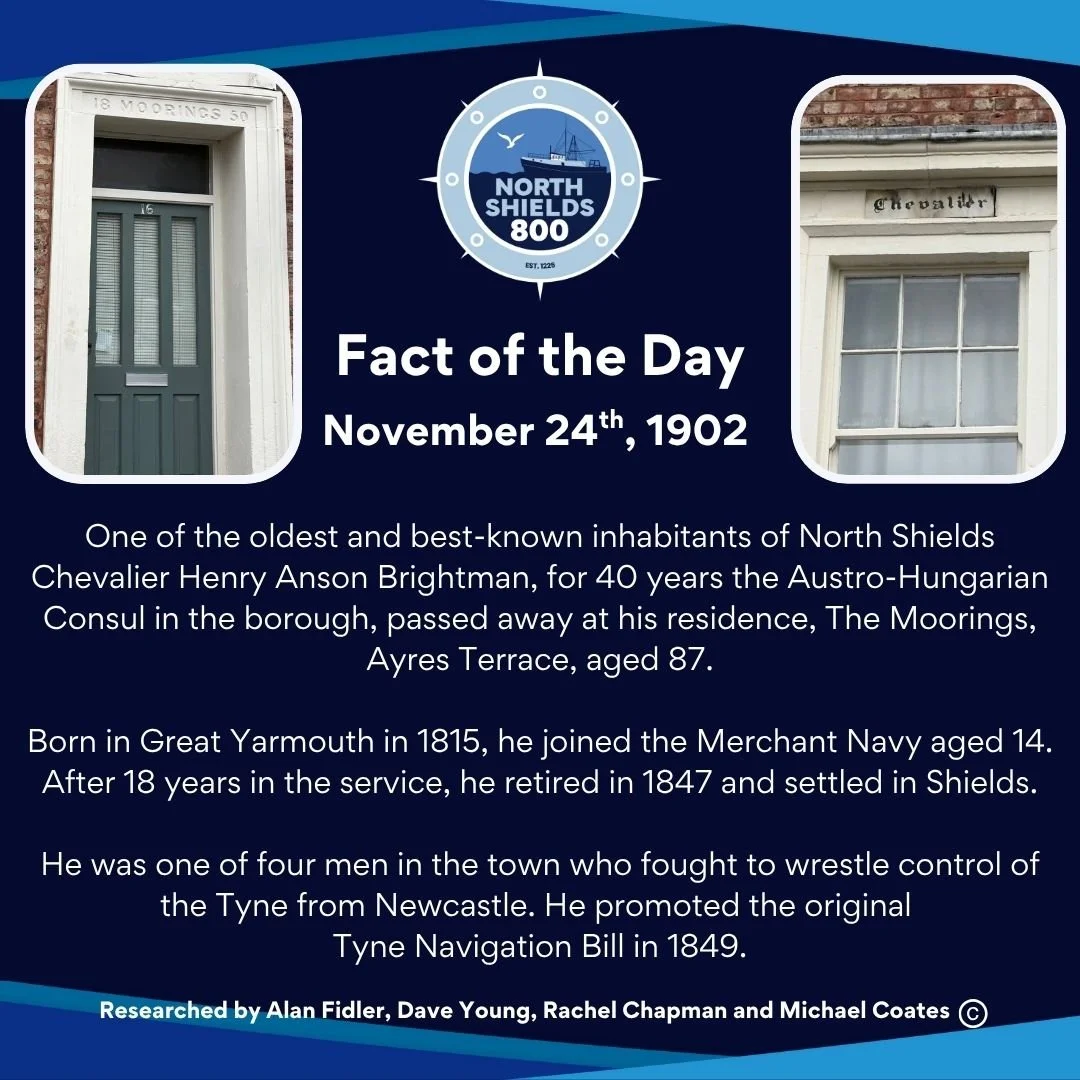
One of the oldest and best-known inhabitants of North Shields Chevalier Henry Anson Brightman, for 40 years the Austro-Hungarian Consul in the borough, passed away at his residence, The Moorings, Ayres Terrace, aged 87.
Born in Great Yarmouth in 1815, he joined the Merchant Navy aged 14. After 18 years in the service, he retired in 1847 and settled in Shields.
He was one of four men in the town who fought to wrestle control of the Tyne from Newcastle. He promoted the original Tyne Navigation Bill in 1849.
November 25th, 1997
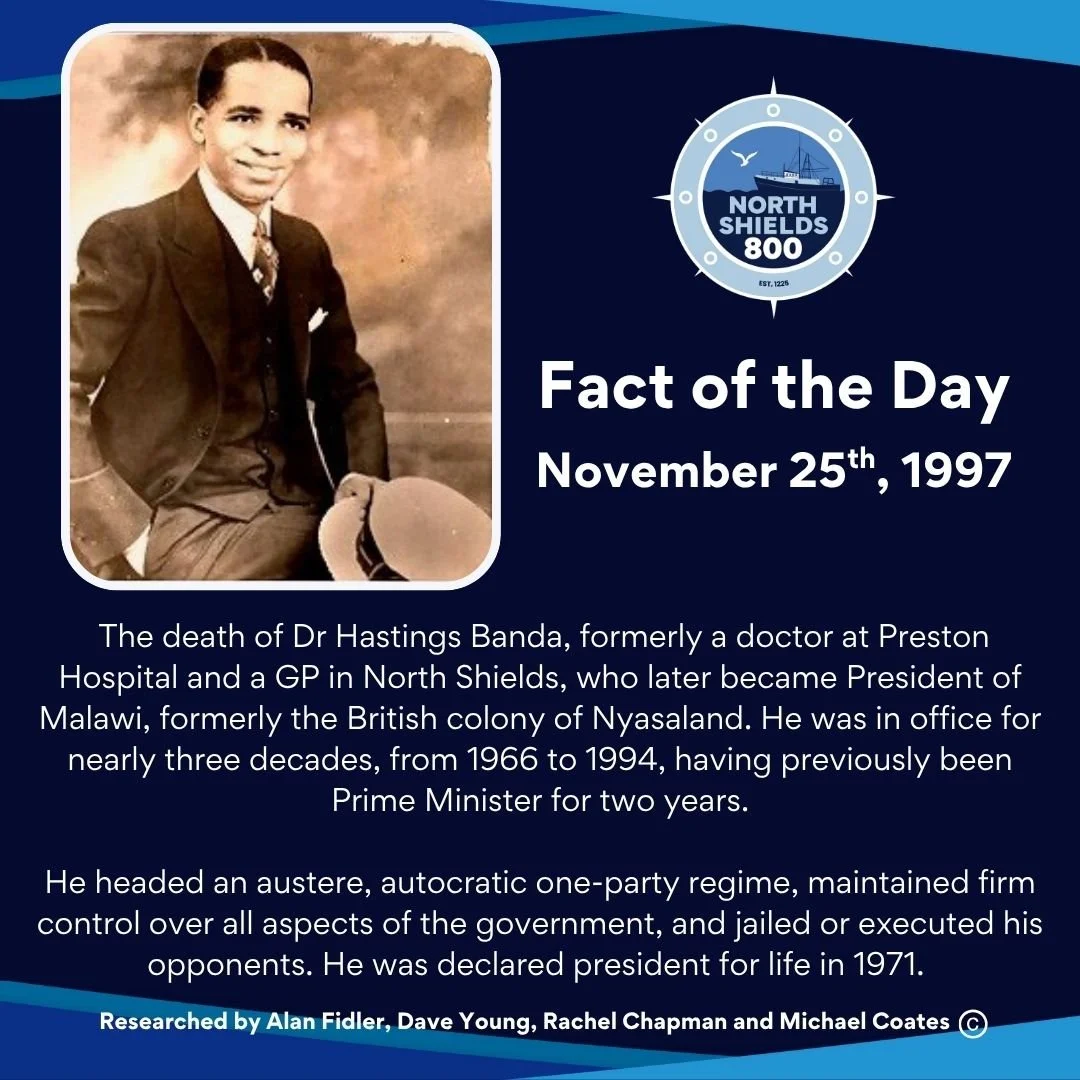
The death of Dr Hastings Banda, formerly a doctor at Preston Hospital and a GP in North Shields, who later became President of Malawi, formerly the British colony of Nyasaland. He was in office for nearly three decades, from 1966 to 1994, having previously been Prime Minister for two years.
He headed an austere, autocratic one-party regime, maintained firm control over all aspects of the government, and jailed or executed his opponents. He was declared president for life in 1971.
November 26th, 1881
The Shields Daily Gazette reports that the dispute at North Shields between steamboat men (who towed sailing fishing boats out to sea) and the owners of the fishing boats, is continuing.
If no settlement is reached today ‘the men will all turn out’. Following the passing of a resolution the previous week, they had all been working pending an agreement being reached.
November 27th, 1952
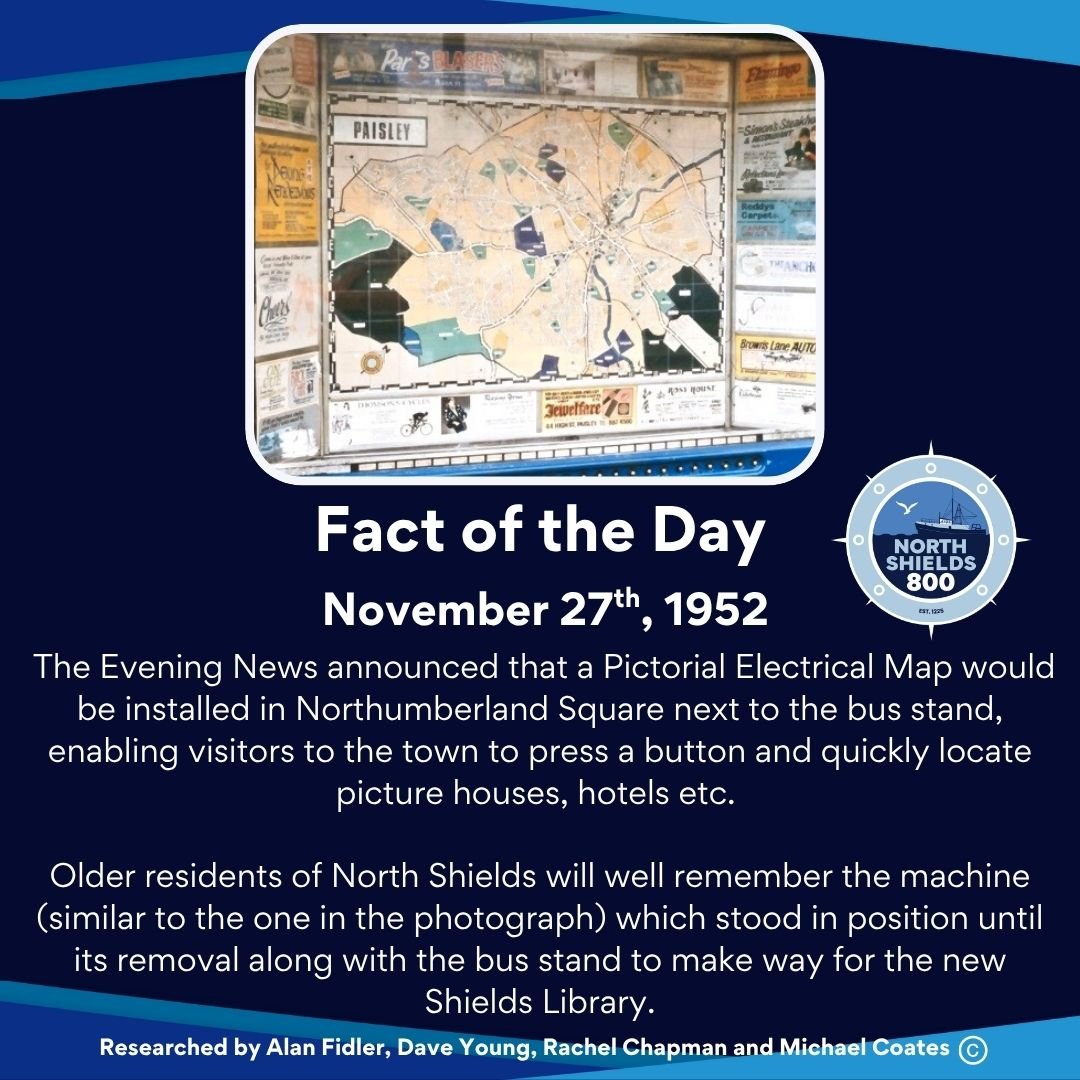
The Evening News announced that a Pictorial Electrical Map would be installed in Northumberland Square next to the bus stand, enabling visitors to the town to press a button and quickly locate picture houses, hotels etc.
Older residents of North Shields will well remember the machine (similar to the one in the photograph) which stood in position until its removal along with the bus stand to make way for the new Shields Library.
November 28th, 1811
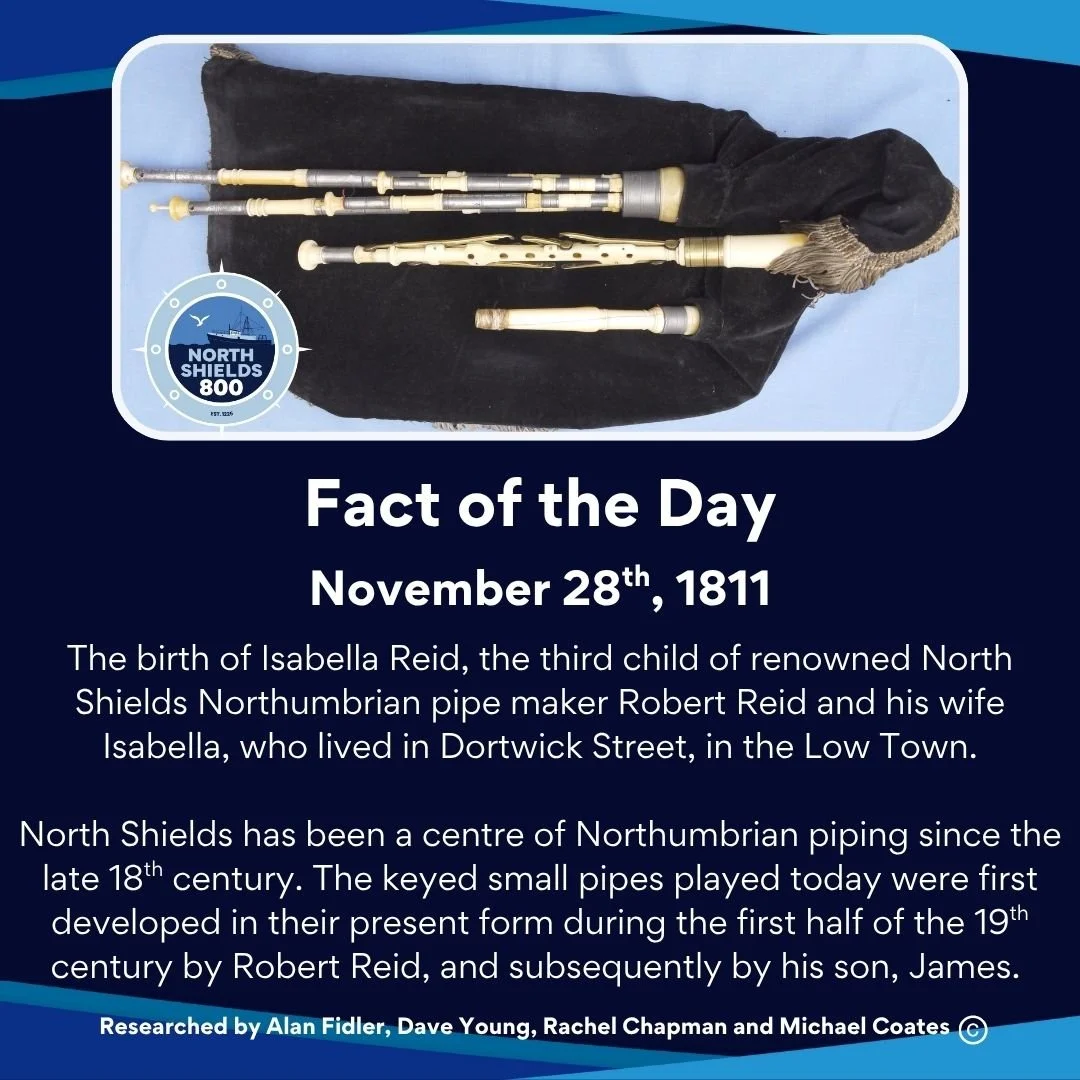
The birth of Isabella Reid, the third child of renowned North Shields Northumbrian pipe maker Robert Reid and his wife Isabella, who lived in Dortwick Street, in the Low Town.
North Shields has been a centre of Northumbrian piping since the late 18th century. The keyed small pipes played today were first developed in their present form during the first half of the 19th century by Robert Reid, and subsequently by his son, James.
November 29th, 1864
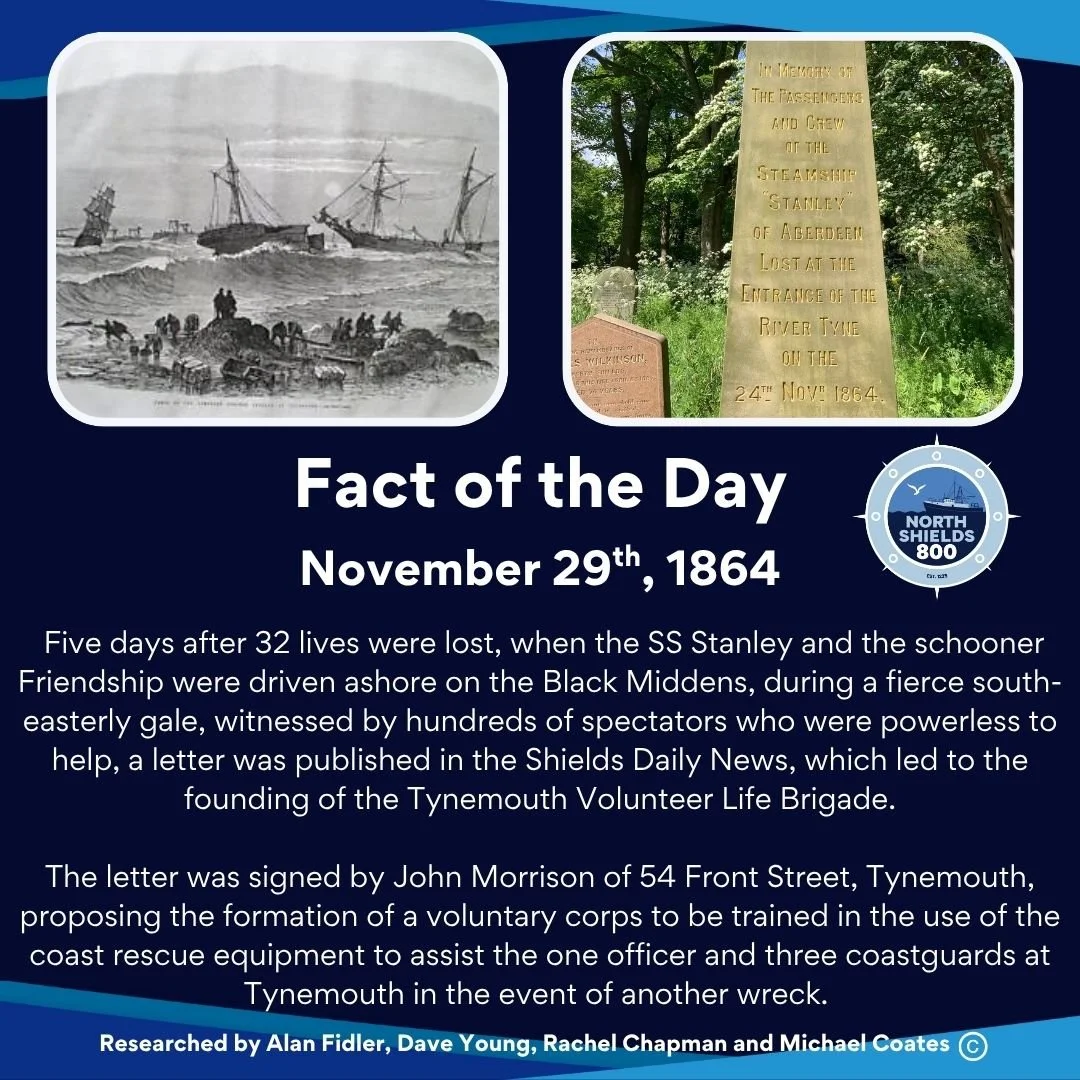
Five days after 32 lives were lost, when the SS Stanley and the schooner Friendship were driven ashore on the Black Middens, during a fierce south-easterly gale, witnessed by hundreds of spectators who were powerless to help, a letter was published in the Shields Daily News, which led to the founding of the Tynemouth Volunteer Life Brigade.
The letter was signed by John Morrison of 54 Front Street, Tynemouth, proposing the formation of a voluntary corps to be trained in the use of the coast rescue equipment to assist the one officer and three coastguards at Tynemouth in the event of another wreck.
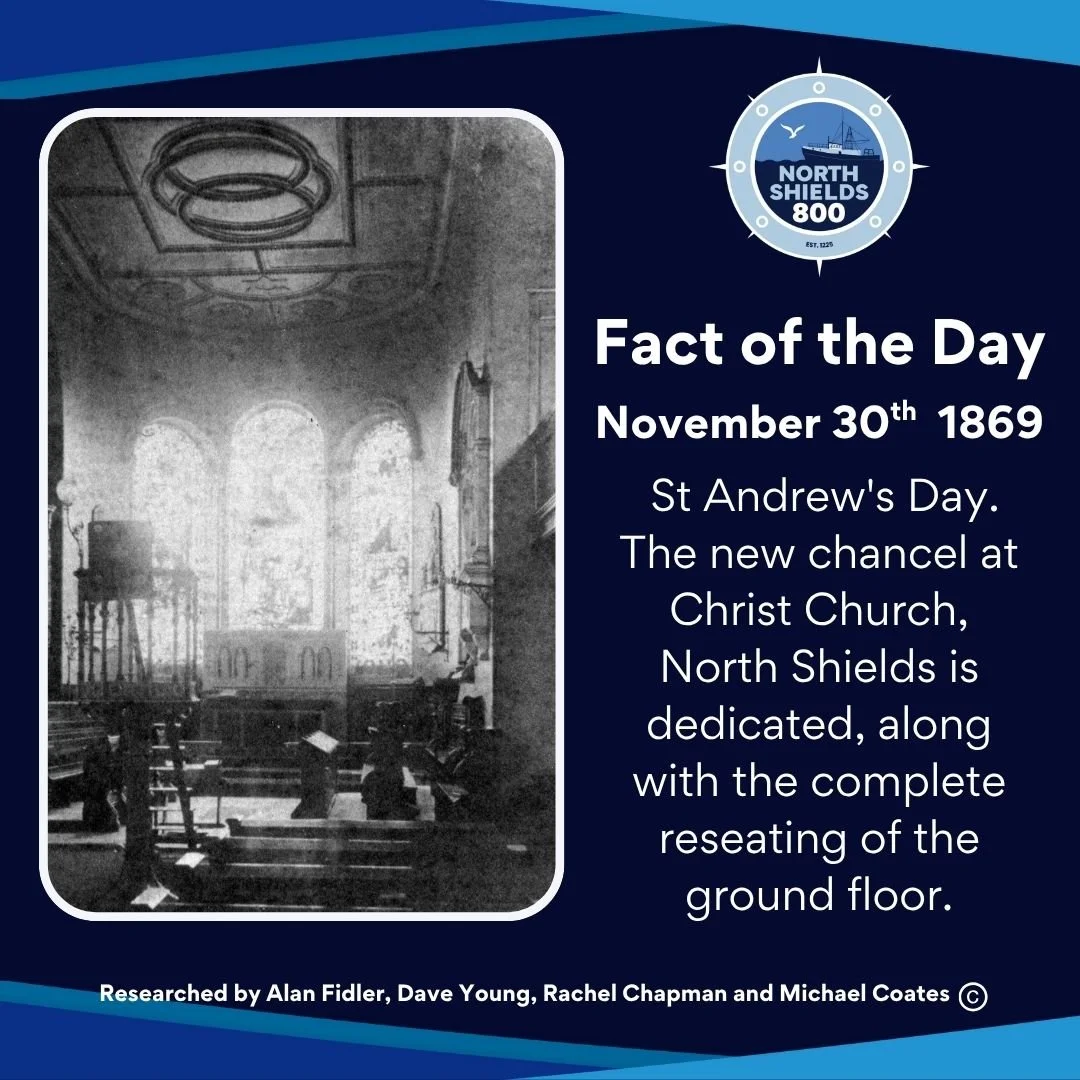
November 30th, 1869
St Andrew's Day. The new chancel at Christ Church, North Shields is dedicated, along with the complete reseating of the ground floor.